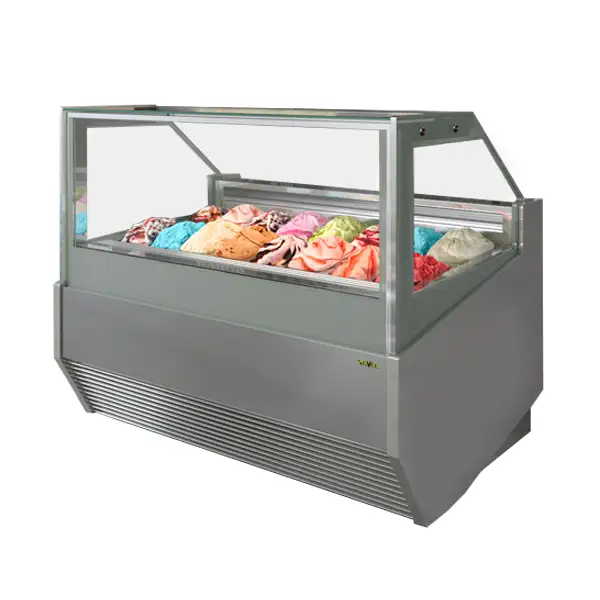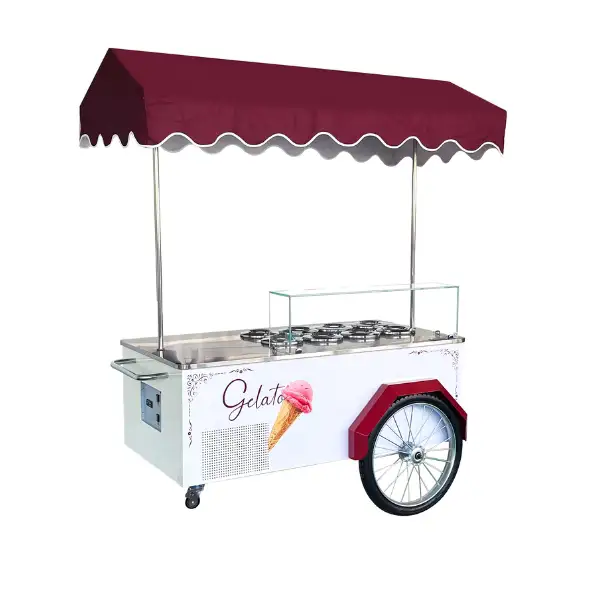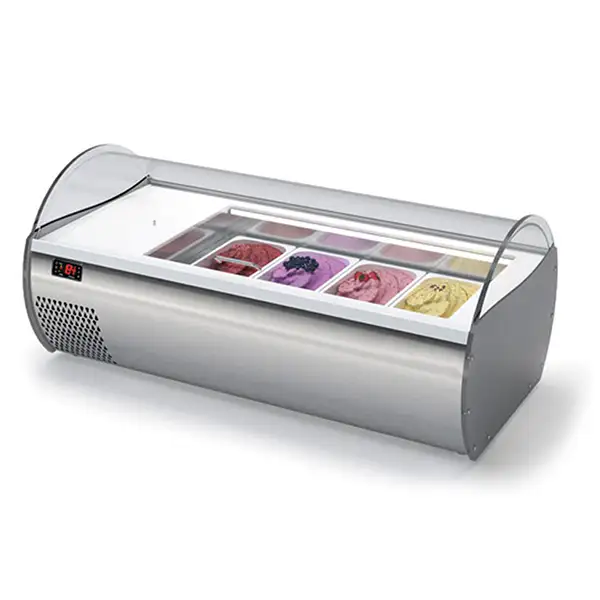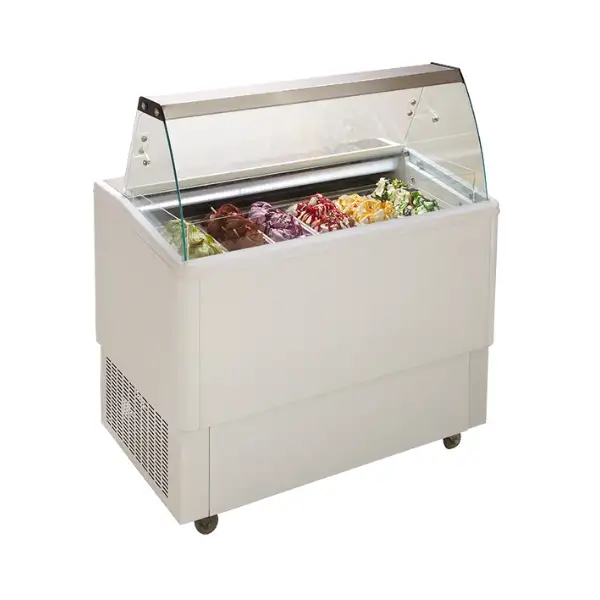

Selecting a gelato display case isn’t just about picking something that looks nice. It’s a decision that impacts your workflow, product quality, and ultimately, your sales. Whether you’re launching a new program or upgrading your current setup, here are the key factors to keep in mind.
1. Start with Your Intent
Before diving into specs, ask yourself one simple question: What role will this case play in my business?
- Front of house, main attraction:
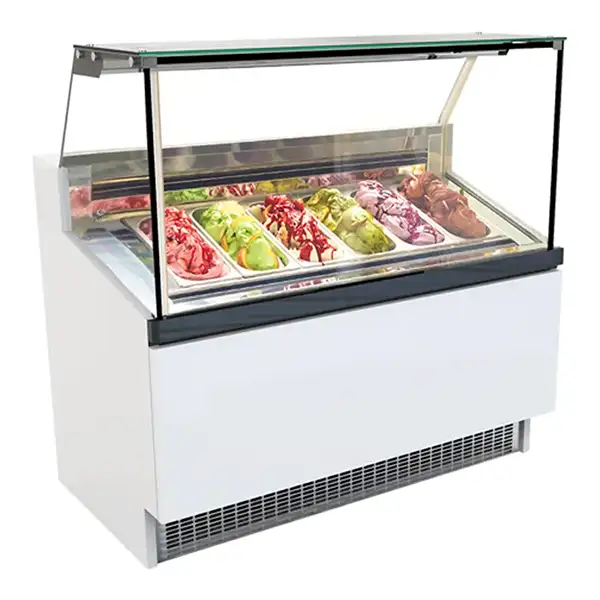
If gelato is a focal point, your case should be highly visible, well lit, and designed to showcase the product. Larger showcases with strong merchandising appeal work best here. - Front of house, upsell at the register:
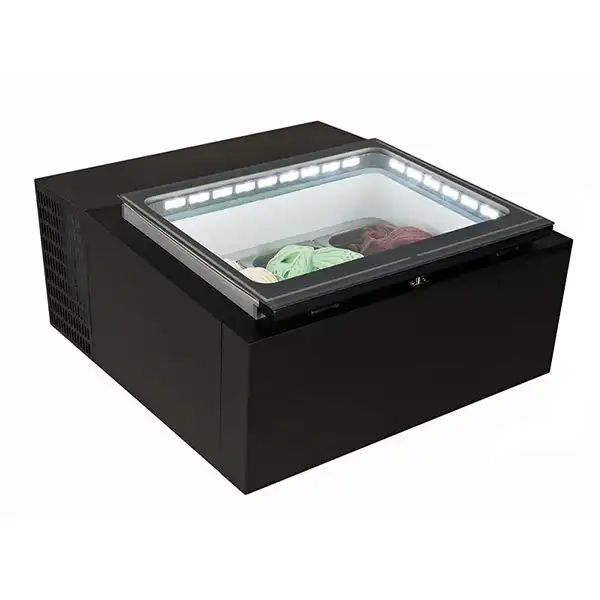
A smaller countertop unit can be incredibly effective for impulse purchases without taking up too much space. - Back of house:
If gelato is being used as an ingredient, think plated desserts, milkshakes, or affogatos. In this case, function matters more than presentation. Compact, efficient storage is often the better fit.
Your intent will guide nearly every other decision.
2. Plan for Servings and Volume
One of the most important and often overlooked considerations is how much you actually plan to sell or use.
- Scooping from a display case:
You will want enough capacity to support peak demand, maintain a full and attractive appearance, and offer a variety of flavors without running out during service. - Using gelato as an ingredient (back of house):
Your needs may be more about consistency and volume rather than display. Storage capacity and ease of access matter more than visual merchandising.
Understanding your projected volume helps answer key questions:
- How many servings per day do you expect to sell?
- What portion size will you serve?
- How often will you restock or rotate flavors?
Choosing the right case size becomes much easier when you connect pan capacity to actual servings and sales goals. A case that is too small can limit revenue, while one that is too large can lead to inefficiencies.
This is also where guidance matters. Working through serving sizes, throughput, and ROI upfront can help ensure your equipment supports your business, not the other way around.
3. Evaluate Your Space
Not every location is built the same, so it is important to measure carefully and think beyond just footprint.
- Available floor space:
Will a floorstanding case fit comfortably, or is a countertop model more realistic? - Customer flow:
Make sure your case placement does not disrupt ordering lines or traffic patterns. - Clearance and access:
You will need room for opening doors, cleaning, and routine maintenance.
A beautiful case that crowds your space can hurt the customer experience more than help it.
4. Choose the Right Size
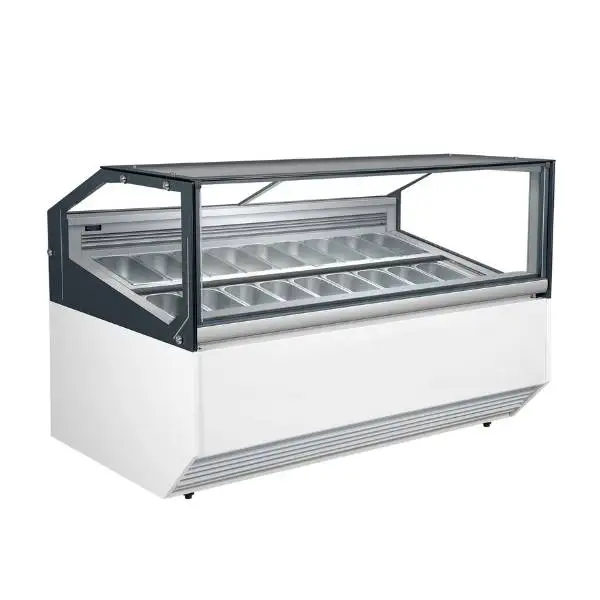
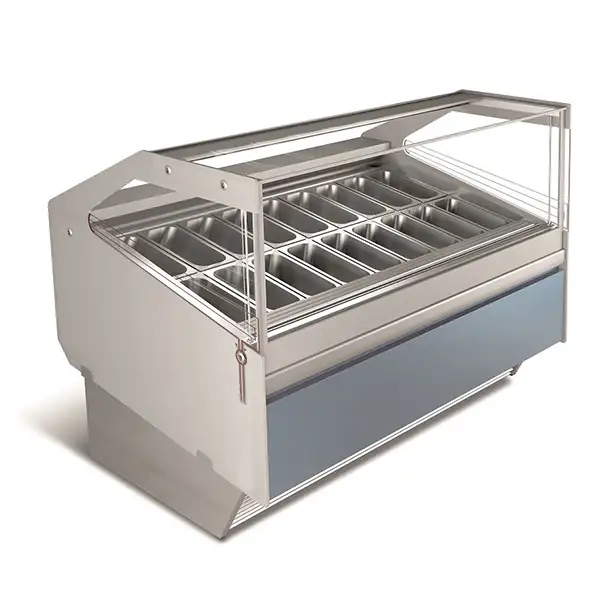
Display cases come in a wide range of capacities, from a handful of pans to full multi flavor presentations.
When selecting a size, consider:
- Your expected serving volume
- Number of flavors you want to offer
- Whether gelato is a primary menu item or a secondary offering
The goal is to align your case size with both your current demand and your growth potential.
5. Understand Power Requirements
This is one of the most overlooked but critical factors.
- Standard electric (120V):
Easier to install and compatible with most locations. - Higher voltage (208V):
Typically required for larger or higher capacity units, often delivering stronger performance.
Before purchasing, confirm what your space can support. Planning ahead can help you avoid unexpected installation costs or delays.
6. Ventilation: Static vs. Ventilated
Ventilation affects both performance and the environment around your case.
- Static (Air-Cooled):
Easier to install, but they release heat into the room. - Remote or ventilated systems:
Move heat away from the case, helping maintain a cooler and more comfortable space, especially in high-volume settings.
7. Countertop vs. Floorstanding
Both options serve different needs:
- Countertop cases:
Ideal for smaller spaces, secondary placements, or testing a gelato program. - Floorstanding cases:
Better suited for full scale offerings with higher visibility and greater capacity.
If gelato is a key driver for your business, a floorstanding case often delivers stronger long term results.
8. Think Beyond the Equipment
A display case is an investment, but it does not have to be a barrier to entry.
Access to preferred pricing across multiple equipment suppliers can help you find the right fit at the right cost. Programs that offer rebates tied to product purchases can also help offset your upfront investment over time.
With the right structure, those rebates can add up quickly and help turn your display case into a revenue generating asset from day one.
The right gelato display case should fit your space, match your operational needs, and support your sales goals. When chosen thoughtfully, it becomes more than just equipment. It becomes part of your overall strategy.
With decades of experience working alongside operators, we have seen firsthand how the right setup paired with the right planning can make all the difference. From estimating serving sizes to projecting ROI, having a clear plan in place ensures your investment works as hard as you do.